
MADAGASCAR
Land of Lemurs
By Charlotte McGlone
Chapel Hill, NC, United States
Madagascar is the fourth largest island in the world. Within its 226,658 square miles (587,041 square kilometers) lie a variety of interesting geographical regions. Its shoreline gives way to coastal plains, while its center holds high mountains and plateaus. Temperatures vary by region and elevation but average about 80°F (27°C) in January and 70°F (21°C) in July.
Biodiversity
The many ecosystems of the island make it one of the most biodiverse countries in the world. About 85 percent of its plants and animals are found nowhere else on Earth. More than 100 species of lemur live in the wild only in Madagascar, and if it were not for this remote island, they probably would not exist.
All About Lemurs
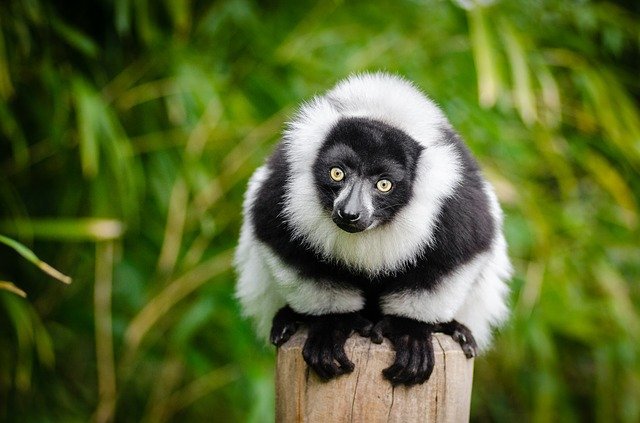
Thank goodness they do exist! Lemurs are fun and interesting creatures. They belong to an order of mammals called primates, which includes apes, monkeys, and even humans!
Lemurs have many important features. They have hands and feet with digits that can grasp tree branches. They exist in many shapes and sizes ranging from 1.1 ounces to 20 pounds.
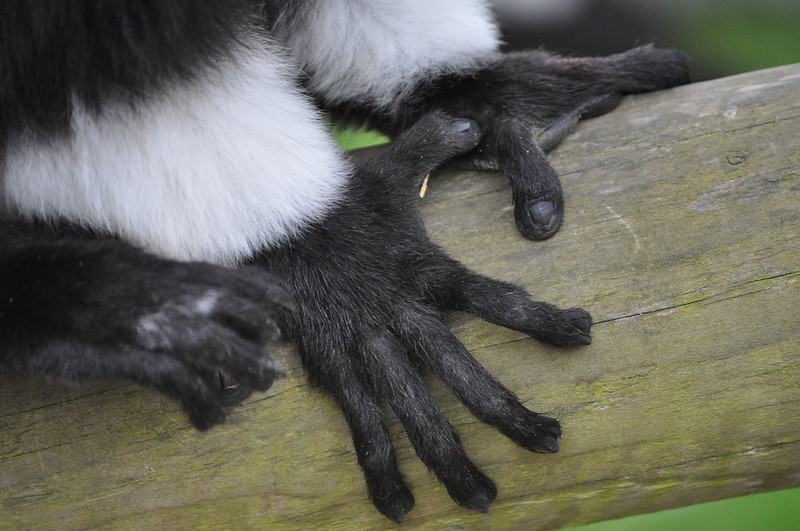
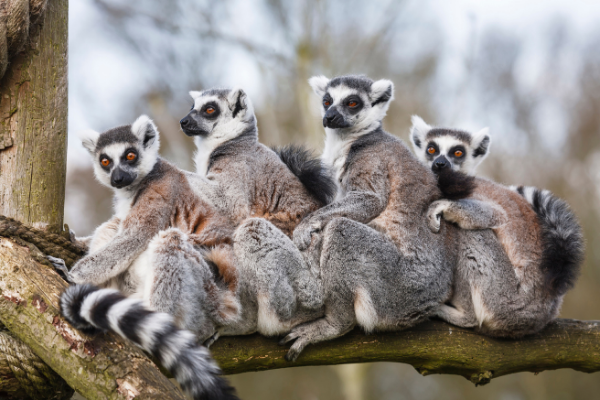
Lemurs have many different social and activity patterns. Some live in groups, while others spend much of their time alone. About two-thirds of lemur species are nocturnal, and many of these have large eyes that help them see in low light. Lemurs also have a highly developed sense of smell, which they use to find food and share information about who has passed by.
Lemur Evolution
Scientists estimate that lemurs have lived in Madagascar for somewhere between 25 million and 55 million years. By the time their ancestors arrived, Madagascar had already been separated from mainland Africa for millions of years. Scientists think a small group of early primates may have crossed the ocean on floating mats of vegetation.
Once on the island, these ancestors remained sheltered from the rest of the world. Over time, they adapted to Madagascar’s many habitats and evolved into the robust communities we know today.
Conservation
Now that you know how exciting lemurs are, it is vital to reflect on how we can ensure their security. When we humans expand into wilderness areas around us, we cause problems for native creatures that inhabit these places and also seek to coexist. As of 2025, the IUCN Red List of Threatened Species reports that 98 percent of lemur species are threatened with extinction.
We can achieve a balance between the needs of humans and animals as long as we recognize the importance of every element in the ecosystem. It would be a shame to let these amazing creatures disappear from the face of the earth, so we should do everything in our power to live in harmony with our lemur brothers and sisters on the majestic island of Madagascar.
Have a suggestion for this story? We’d love for you to submit it!
Blank
Blank
Slideshows
Are you a teacher who’s interested in telling this story to your students? Here are two slideshows you can use to get started.
Math Resources
- How much older is the oldest lemur fossil compared to the oldest human fossil?
- Research the rate at which forest habitat in Madagascar is disappearing. Design a graph that predicts when the forest will vanish completely.
- If you were to start a lemur breeding program and started with two lemur pairs, how long would it take for you to compensate for the reduction of lemur numbers in Madagascar?
Extension Question
One of the reasons lemurs are endangered is habitat destruction. How do you respond to the argument that humans need to claim lemur land for their own livelihood?
Explore Further
- Facts about lemurs
- Blog about the status of lemur conservation
- Website of the Lemur Conservation Network
- Website of the Duke University Lemur Center
- Video of sifaka lemurs
- Facts about Madagascar
- IUCN Red List of endangered species
Share Your Story
Write your own Global Math Story and send it to us!
 English
  Spanish
Sorry, the comment form is closed at this time.