
ECUADOR
The Blackboard
By Rodrigo Oswaldo Merchan Márquez
Quito, Ecuador
That dawn, a Thursday in November 1988, was unlike any other. Outside the Salesian Mission in the parish of Zumbahua, Ecuador, the wind struck fiercely and the cold seemed to freeze everything in its path. The clock read 3:00 AM, time to wake up.
My fellow volunteer Vicente and I ate breakfast, then put on our warmest clothes. We slung our backpacks over our shoulders, filled with popular education pamphlets from the Fe y Alegría Radio Institute, along with teaching guides for math, language, social studies, and natural sciences. We set out to cover the 30 kilometers (km) between Zumbahua and the community of Guayama San Pedro in the parish of Chugchilán, much of it across highland terrain.
Holding On
In our hands, we carried a blackboard, 1.22 meters (m) wide by 2 m long, painted on both sides, which we held upright as we walked. It had been kindly donated by Monsignor José Mario Ruiz Navas, then Bishop of the Diocese of Latacunga.
At 3:30 AM we were ready to begin our walk. Wool gloves, socks, and balaclavas were essential as the wind would blow hard and the dust would cover our bodies. As we walked, we gripped the blackboard with all our strength, one hand on the top edge, the other on the bottom. Sometimes Vicente led; at other times, I did. We switched sides, right to left and back again. Our only goal was to hold it firmly. Neither of us wanted to be responsible for any damage.
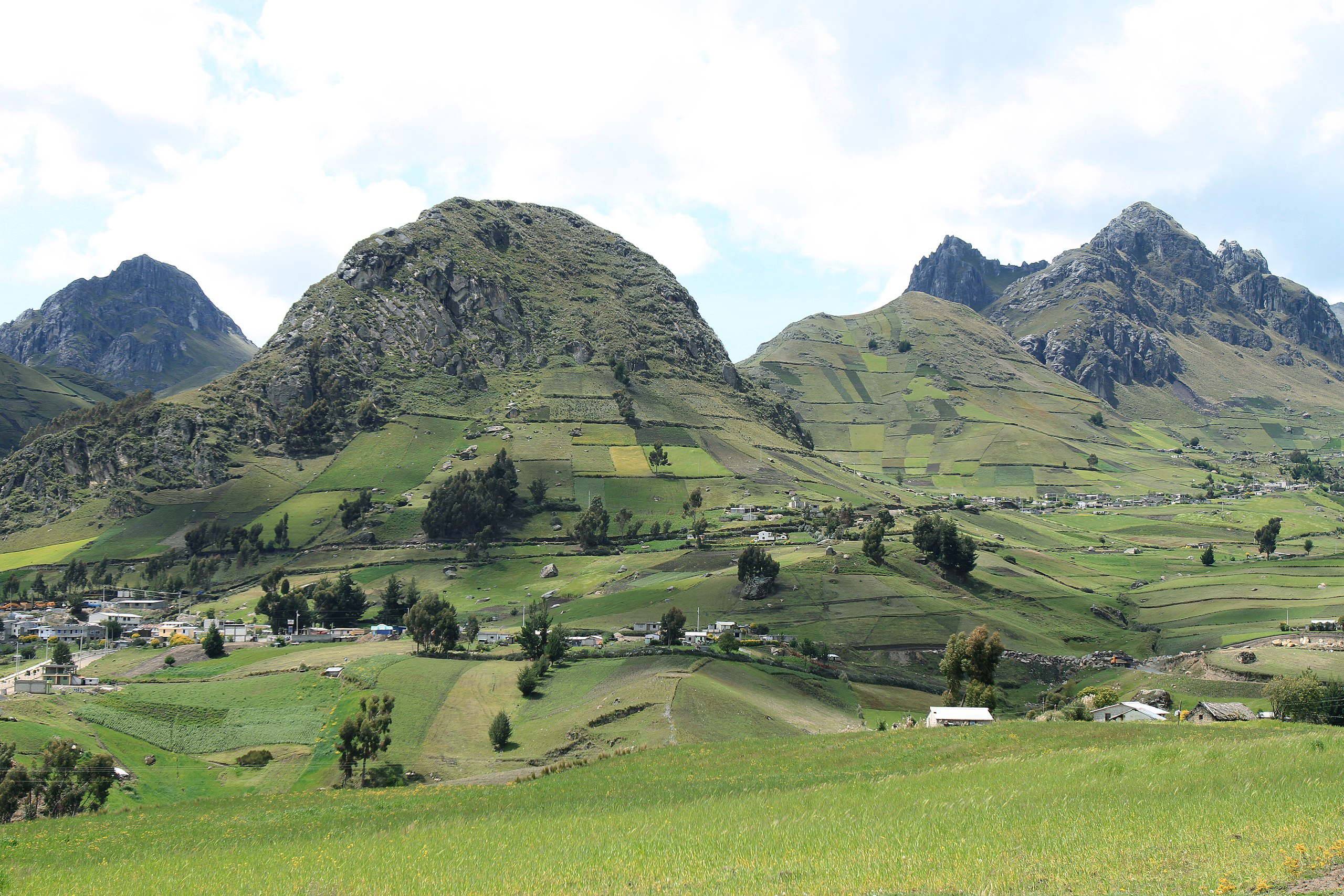
View of Zumbahua. Adaptation of “Circuito Turístico Zumbahua Chugchilan, prov. Cotopaxi.” by Ministerio de Turismo Ecuador. Licensed under CC BY-NC-SA 2.0.
Our First Test
We finally passed the first community, called Pucaugsha, whose name comes from Kichwa, an Indigenous Andean language, and can be translated as “Red Straw.” Everyone was asleep, though a few dogs noticed us. They approached, barking and threatening us. Neither of us let go of the blackboard. Using it as a shield, we protected ourselves and slowly moved away from the danger. Our heart rates returned to normal.
We reached part of the route that crossed a sandy plateau over 5 km long, between the entrances to the communities of La Cocha, whose name means “The Lake” in Kichwa, and Quilapungo (“Gateway of the Moon”). Here we had to double our strength to hold the blackboard. In the open field, the wind blew harder, and the flying sand impaired our vision.
The Plateau Pushes Back
I feared the blackboard might break in our hands under the force of the wind and never reach its final destination. Vicente began to sing: “Caminante, no hay camino, se hace camino al andar,” made famous by Joan Manuel Serrat. It wasn’t the first time I’d heard him sing that song, especially when faced with difficulty.
He was from Guayaquil and was seven years older than I. At the Salesian Mission house, we teased him, saying he was “the best economist in Zumbahua—because there’s no other.”
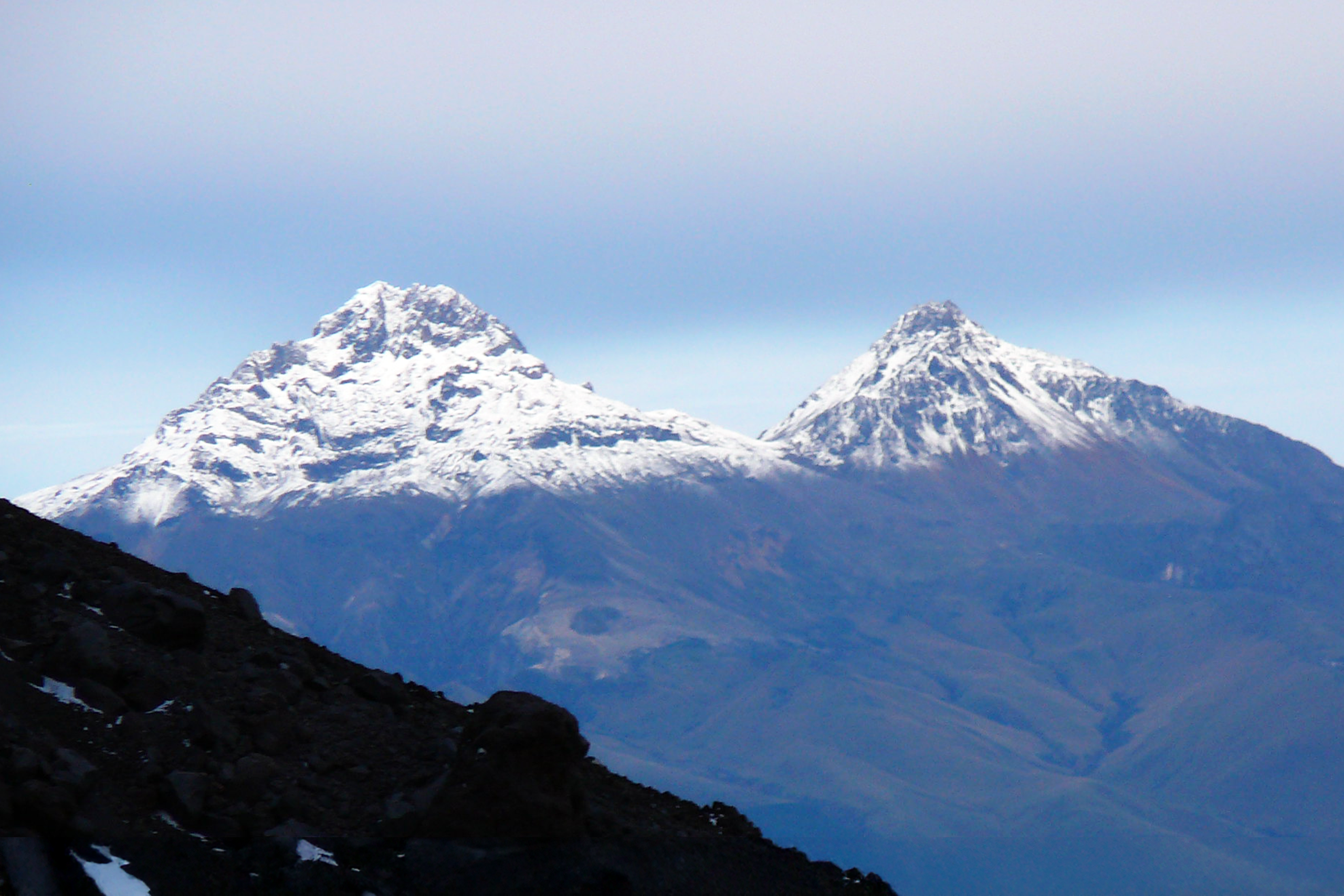
The Illiniza peaks. Photo “Illiniza” by alexandre. Licensed under CC BY-NC-SA 2.0.
The Long View
At 6:00 AM, we were nearing the ridges of Quilotoa Lagoon (“Princess’s Tooth”), nearly 4,000 m above sea level. To the east, the sun began to rise. The air was crisp, the sky blue, the cold froze the soul. We could see the Illinizas, two snow-capped sibling peaks over 5,100 m tall. The locals told us, “In about 30 years, they won’t have snow anymore. The warming will leave only bare rock.” Looking back now, it is clear how much of that change has already happened.
We were alone, guarding the blackboard, which by then felt like many things at once: an amulet, a treasure, a good intention, and perhaps even pain and penance. In any case, we were halfway there, with the blackboard in our exhausted, numb hands.
The Moment We Feared
Crossing the highest sandy ridges of the lagoon, which lies atop the crater of a dormant volcano and is 250 m deep, a sudden gust of wind tore away our precious cargo as if it were a napkin. It was swept down the slope and disappeared from view. I couldn’t look away, not even to admire the lagoon’s turquoise waters. I saw Vicente drop his backpack and run after the blackboard. Without a thought, I followed.
Wouldn’t Dante Alighieri have done the same if Hell had taken away his Divine Comedy? Wouldn’t Ulysses have reacted the same way if something had threatened to separate him from his beloved Penelope? Wouldn’t an eagle throw itself into the void with all its strength to save its eaglet from falling to its death?
After twenty-five minutes of slipping, falling, stumbling, and running, we finally caught up with the blackboard. Luckily, it hadn’t reached the water; otherwise, this story would have had a sad ending.
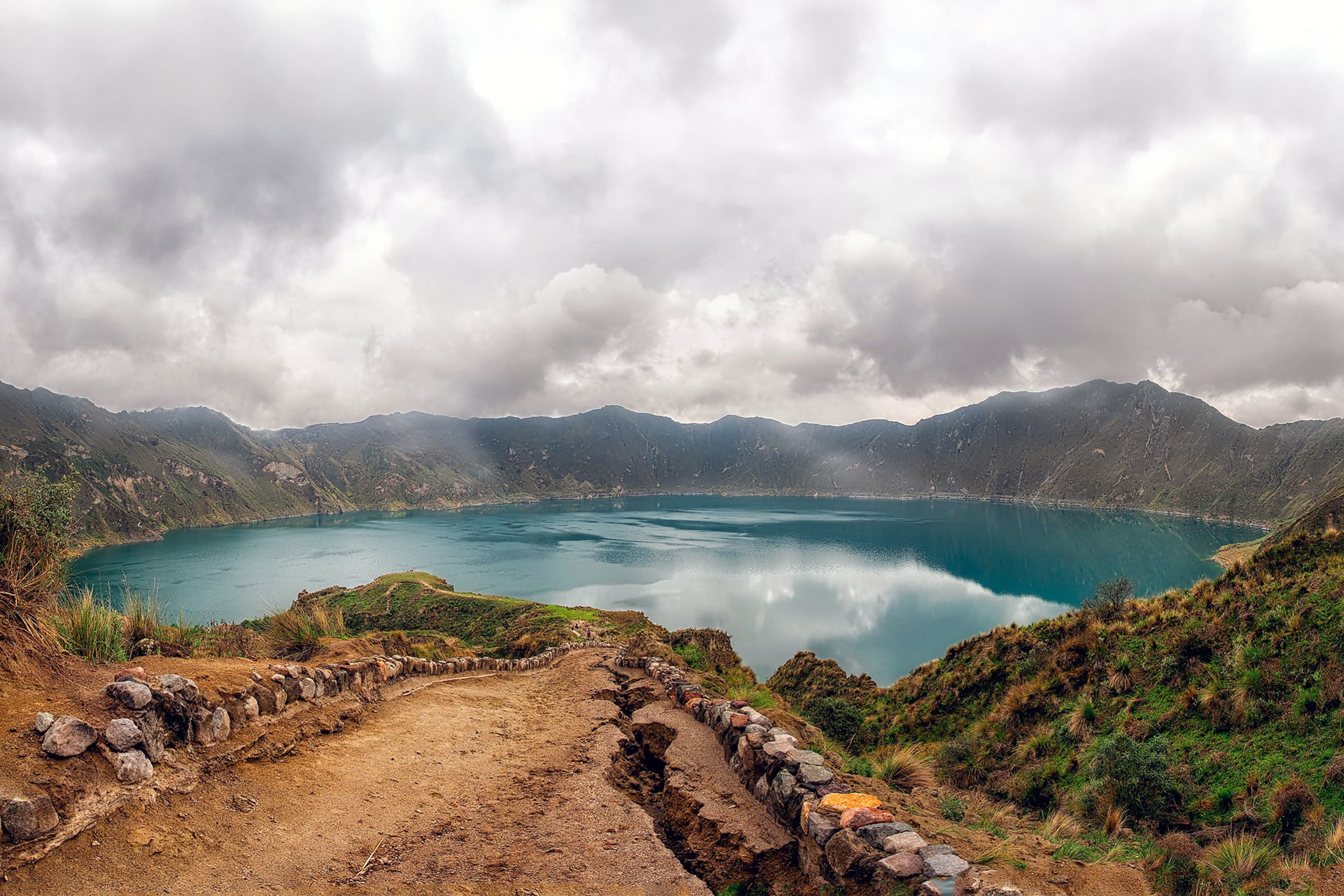
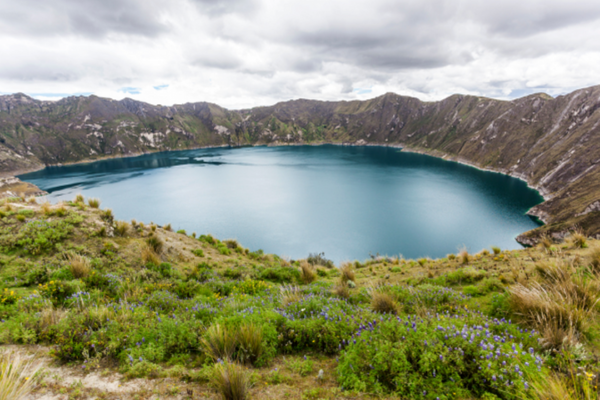
Quilotoa Lagoon. Adaptation of “Quilotoa” by simon_berger. Licensed under CC BY-NC-SA 2.0.
Uphill Again
We began the climb back uphill. We fought against grass, branches, shrubs, sand, and exhaustion. After an hour and a half, almost breathless, we reached the spot where we had left our backpacks. We then continued on our way.
We resumed the final stretch of the journey to Guayama San Pedro, eight kilometers downhill along the sandy slopes of the volcano. This time we carried the blackboard flat to reduce the risk of another assault from Mother Nature. It was harder to carry that way, as the highland slope was full of bushes.
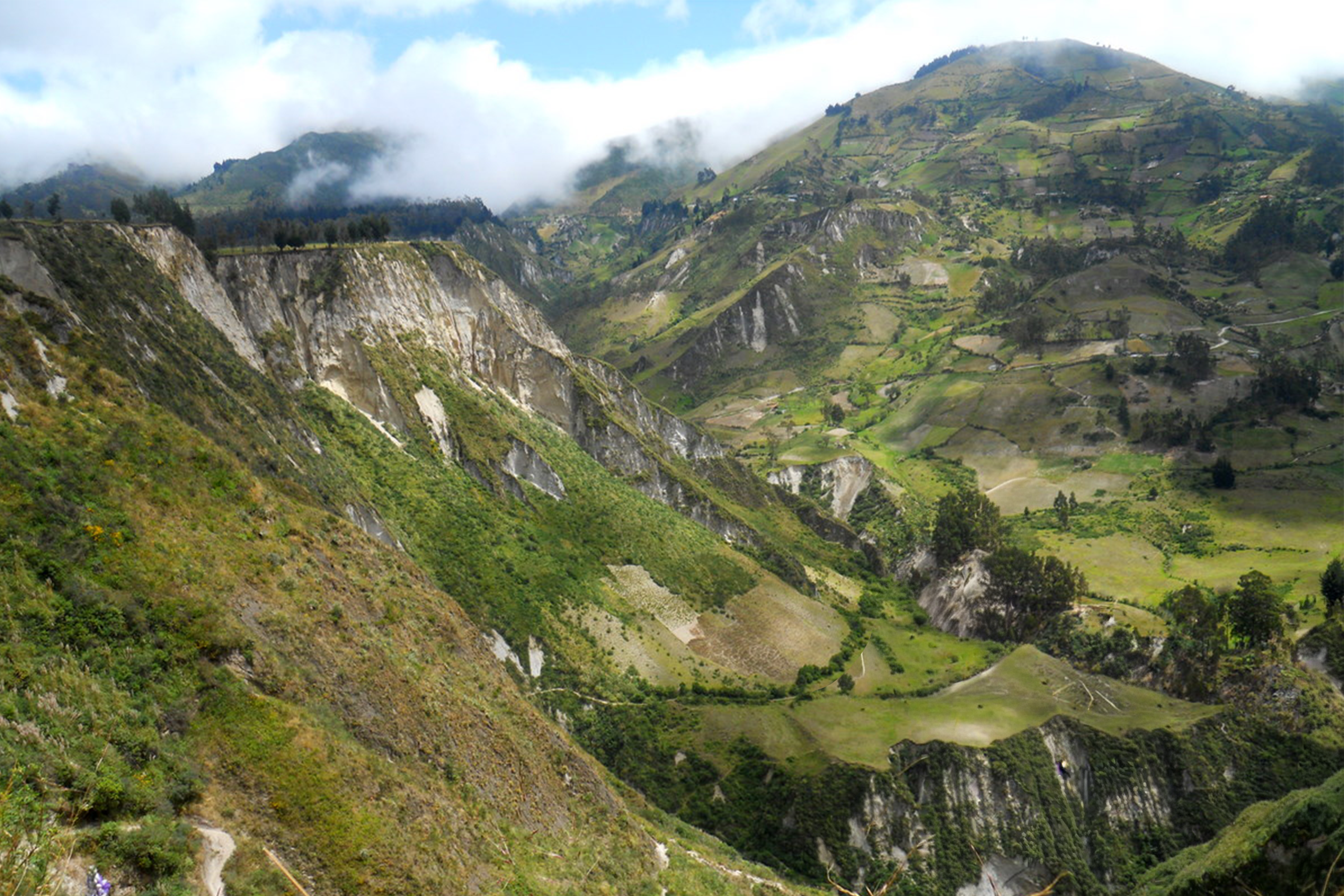
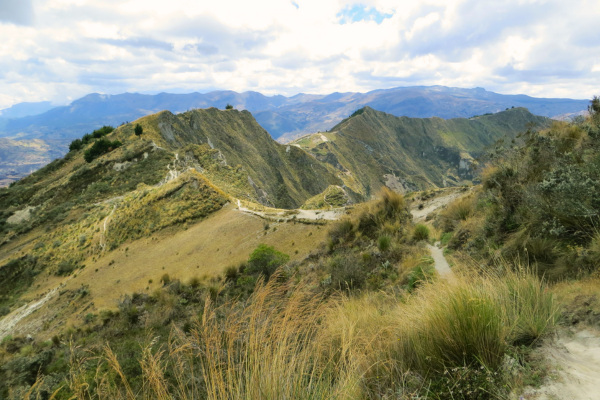
The slopes past Quilotoa Lagoon. Adaptation of “Quilotoa -> Chugchilán” by Ramblurr. Licensed under CC BY-NC-SA 2.0.
At Last, Guayama San Pedro
According to our plan, we were supposed to arrive by 8:00 AM to begin classes at Jatari Unancha, the first school created in the entire Zumbahua–Chugchilán region. Its purpose was to support bilingual teachers from the local schools, since most had only completed primary education. The vision was for teachers to finish secondary school, then go to university and become professionals. Years later, that dream has come true.
Twenty Indigenous students awaited us, mostly men, with only two women. By our calculation, our arrival would be delayed by three hours. For Vicente and me, arriving late meant disrespecting ourselves, and, possibly, others.
A Place for Learning
We reached Guayama San Pedro just before 11:00 AM. Our students were waiting. One said, “We knew you’d come.” Seeing us with the blackboard on our shoulders, they ran to meet us, taking it in their hands and on their shoulders, running their fingers along its rough edges. As if it were the greatest trophy in the world, we placed it on the classroom wall.
From that Thursday in November 1988 onward, Vicente and I no longer had to write in the sand with a stick to help students understand their lessons. The blackboard rested against the classroom wall, and with it came a sense of permanence. After the wind, the cold, and the long road behind us, learning finally had a place to stay.
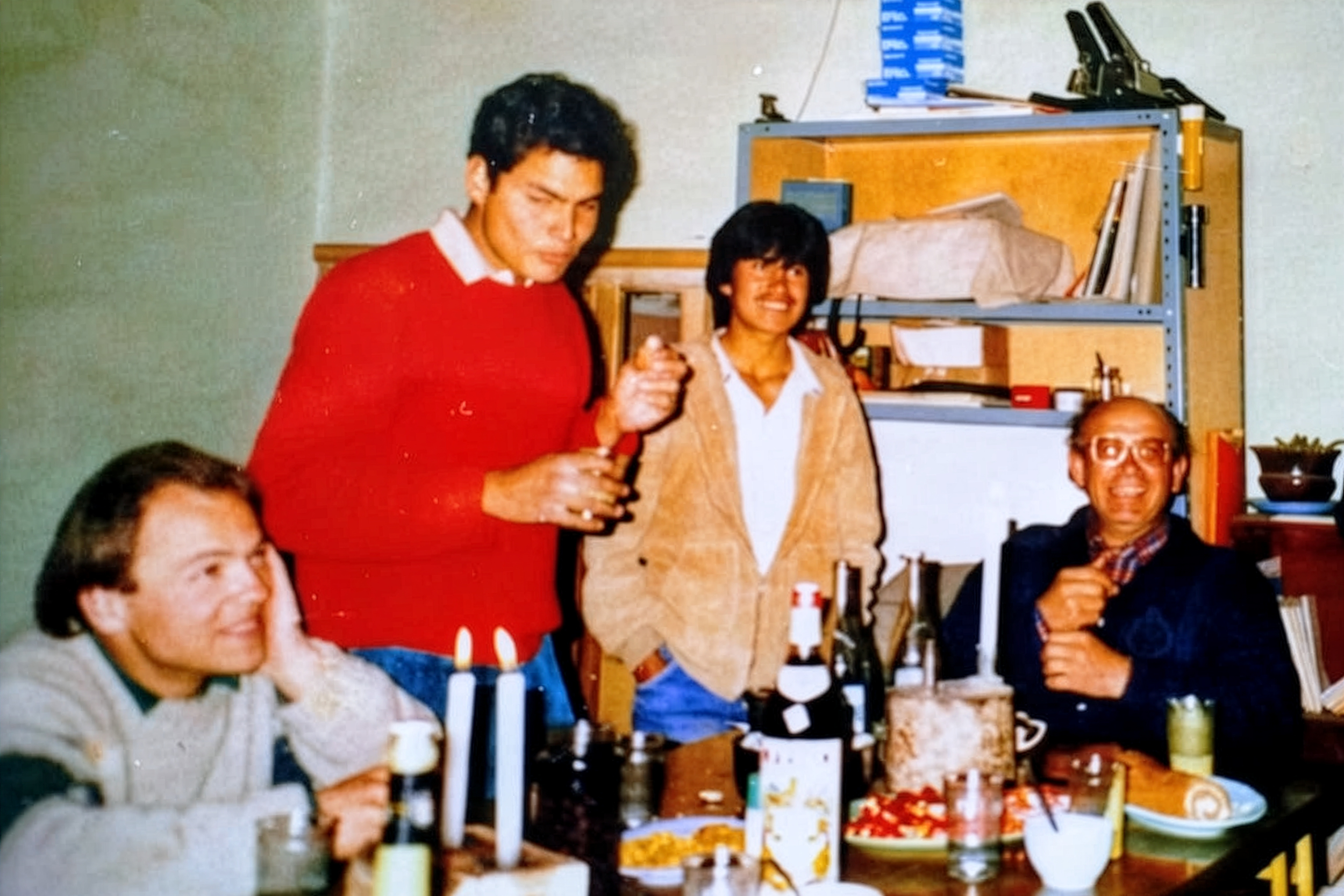
Archival photo from the author, taken at the Salesian Mission in Zumbahua, Ecuador
What Endures
A father, seeing the blackboard on the wall, once exclaimed, “Now yes! Our children will be able to learn—it’s not like before.”
Years later, other parents would say the same words when they encountered new tools: internet connections, virtual whiteboards, artificial intelligence. Each generation, faced with a new possibility, believes learning will finally become more accessible.
And perhaps they are right, at least in part. What remains constant is not the tool itself, but the hope that our children will have more opportunities than we did.
Have a suggestion for this story? We’d love for you to submit it!
Blank
Blank
Math Resources
Sample Problems:
- The author and Vicente not only transported a blackboard but also carried backpacks filled with teaching guides. If each backpack held materials for four subjects, and each subject required three guides, how many guides did one backpack contain? If both volunteers carried backpacks with the same number, how many were carried in total?
- The pair began walking at 3:30 AM and arrived just before 11:00 AM. Assume they arrived at 10:50 AM. How long did the journey take in hours and minutes? If the total distance was 30 km, what was their average speed in kilometers per hour?
- Quilotoa Lagoon sits at nearly 4,000 m above sea level, while the Illinizas peaks rise to over 5,100 m. How much higher are the Illinizas peaks compared to Quilotoa Lagoon? If a school is located at 2,800 m above sea level, how many meters lower is it than the lagoon?
- The blackboard measured 1.22 m wide and 2 m long. What is the area of the blackboard in square meters? If a classroom wall is 5 m wide, what fraction of the wall’s width would the blackboard cover?
- Twenty students were waiting when the volunteers arrived. Only two were women. What fraction of the students were women? What percentage?
Social Justice Questions
In this story, lessons in Guayama San Pedro were sometimes written in the sand with a stick. Two volunteers carried a blackboard 30 km to the school.
- Why do you think they felt it was worth the effort? How is writing on a blackboard different from writing in the sand, and how might those differences affect what students are able to learn or remember?
- What learning tools do students have where you live, and what tools might be harder to access in other communities? How could those differences shape students’ opportunities over time?
Explore Further
- Information about the Fe y Alegria organization
- Overview of Cotopaxi National Park
- Scientific data on Quilotoa volcano eruptions
- Introduction to Zumbahua
- Map showing where the story concludes
Share Your Story
Write your own Global Math Story and send it to us!
 English
  Spanish
Sorry, the comment form is closed at this time.