
FINLAND
The Last Ferry Home
By Chadd McGlone
Chapel Hill, NC, United States
On a gray morning in the Baltic Sea, a ferry pulls away from the harbor in Mariehamn, the capital of the Åland (pronounced AW-land) Islands. Inside the ferry terminal, a screen lists upcoming departures. Rows of times and destinations show how the boats will move throughout the day. For people living in this part of the world, that schedule makes a difference.
Åland is an archipelago between Finland and Sweden. More than 6,700 islands stretch across these waters, but only about 60 are inhabited. Approximately 30,000 people live in the region, and about one-third of them live in Mariehamn. The residents, known as Ålanders, often travel by boat because water separates many of the smaller communities.
Boats Instead of Roads
The ferries run like a floating road system. Instead of highways, Åland has routes that connect one harbor to another. Some shorter routes take an hour. Others take six or more as the boat stops along the way.
A typical ferry might carry 50 to 70 cars, along with people walking or riding bicycles. Passengers often travel free, but vehicles must usually be booked in advance because space is limited. During the busy summer season, those slots fill quickly.
Travel around the islands can also bring unexpected sights. Moose live throughout Åland, and they are strong swimmers. From time to time they can be seen crossing the water in search of food.
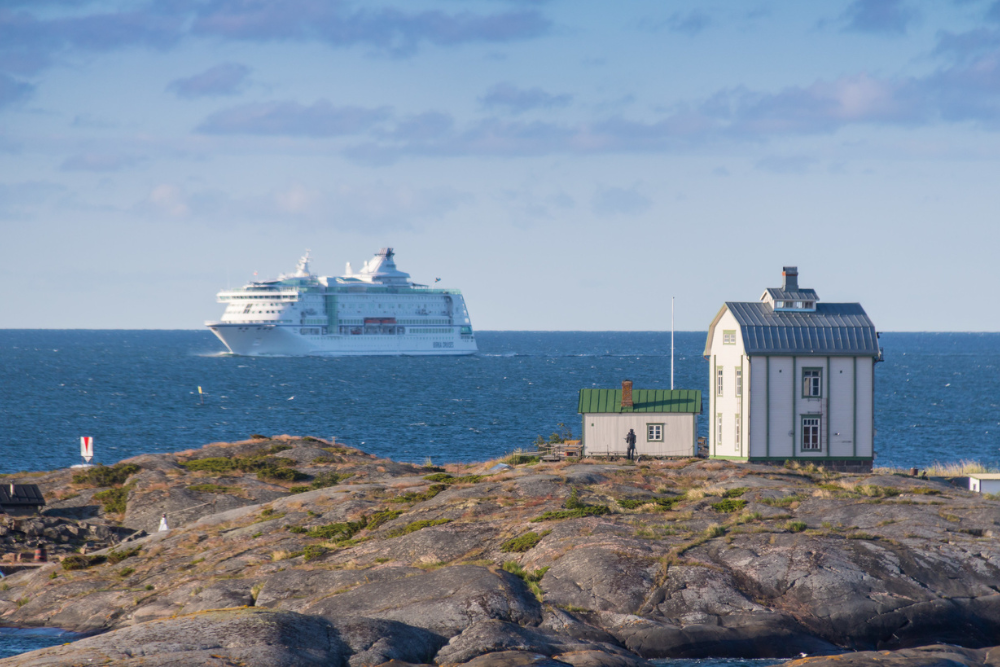
A ferry crosses the Baltic Sea. Photo “Tiny Island” by Suzanne Nilsson. Licensed under CC BY-NC-SA 2.0.
Planning a Day
For Ålanders living on smaller islands, ferry schedules influence everyday life. Imagine living on an island where the ferry arrives twice a day. The morning ferry might leave at 7:30 AM and reach Mariehamn two hours later. The return ferry might leave town at 4:15 PM. That gives residents a short window of time to complete everything they need to do, like doctor’s appointments and grocery shopping. Missing the boat home could mean waiting overnight.
Weather can make travel even more uncertain. Winter ice and rough waves can slow ferries or force them to change routes. When that happens, crossing times can grow longer, and passengers may need to adjust their plans.
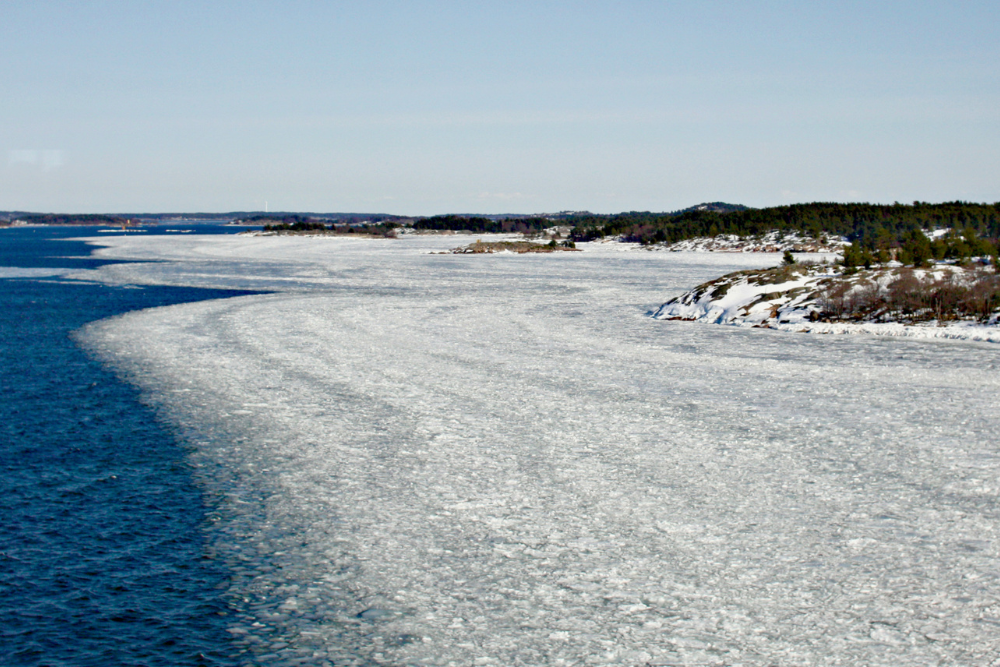
Winter ice along the coastline. Adaptation of “.05 the receding ice” by rosipaw. Licensed under CC BY-NC-SA 2.0.
Between Two Nations
In addition to water and weather, history has left its mark on the islands. After World War I, many Ålanders hoped to become part of nearby Sweden, where they shared a common language and longstanding cultural ties.
Instead, in 1921, the League of Nations decided Åland would remain part of Finland, but with special protections. Finland granted the islands autonomy to govern many of their own affairs through their own parliament.
One important part of that agreement was language. Swedish became Åland’s only official language. It is still used today in schools, government offices, and on street signs.
Disc Golf Destination
A century after this decision, the islands faced a different moment. In 2020, the COVID-19 pandemic caused tourism to drop sharply. The government sought new ways to attract visitors. The idea they chose was simple and unusual: turn the archipelago into a destination for disc golf.
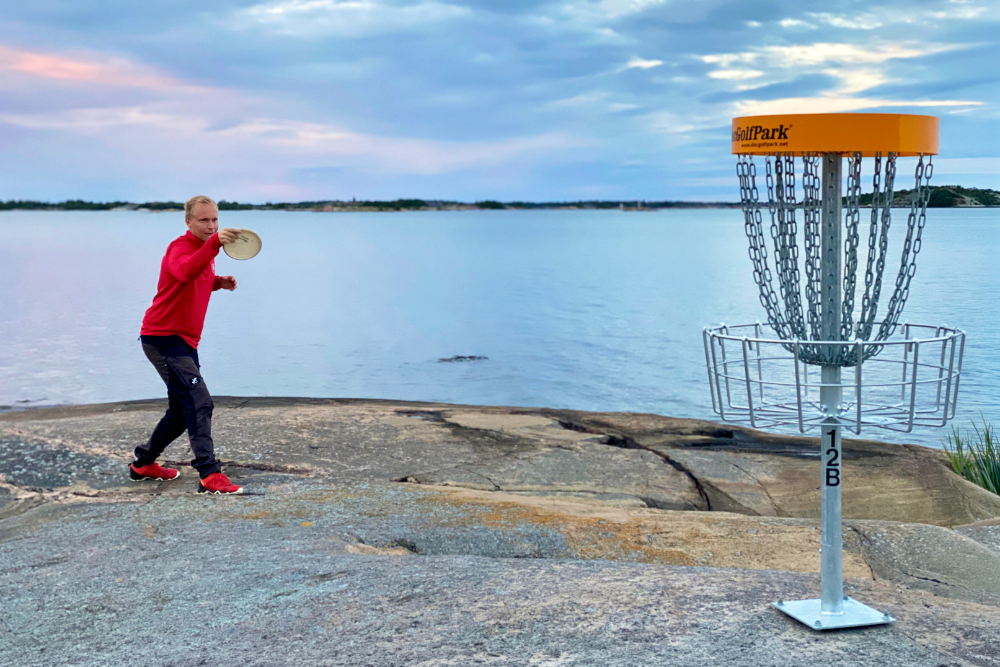
Island disc golf with ocean views. Adaptation of “Lappo DSP #13” by Mats Adamczak. Licensed under CC BY 2.0.
Each of Åland’s 16 municipalities agreed to build a park with at least nine holes. The courses were designed so visitors could travel between them and try different ones. Some courses added an extra element of excitement by placing baskets near the sea, so players must take care not to land their discs in the water.
The effort was so successful that, if all 216 holes were connected into one giant route, it would create the longest disc golf experience in the world. Exploring the parks means planning around ferry schedules. A round of disc golf may stretch across multiple crossings, turning a simple game into a series of coordinated connections.
Life Across the Water
Whether traveling for recreation, errands, school, or work, Ålanders and visitors alike must think carefully about routes and timing. Ferries connect places that seem close on a map but lie across open water. In this scattered archipelago, planning the journey becomes part of everyday life.
Have a suggestion for this story? We’d love for you to submit it!
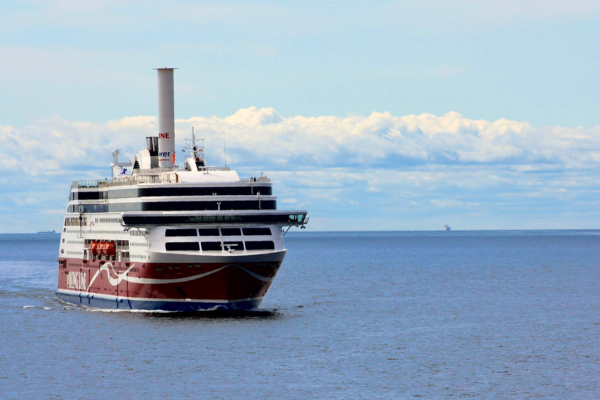
Adaptation of “Viking Grace on the way to Mariehamn” by AnetteWho. Licensed under CC BY-NC-SA 2.0.
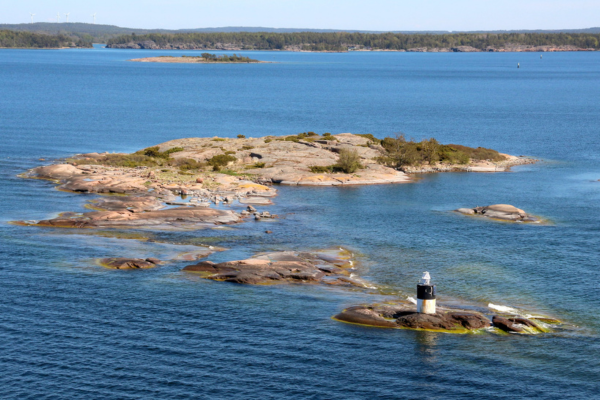
Photo “The Åland Archipelago” by yrjö jyske. Licensed under CC BY 2.0.
Blank
Blank
Math Resources
Sample Problems:
- A ferry carries 60 cars. If 18 spaces are still open, how many cars are already on board?
- A ferry arrives at an island twice a day. How many times does it arrive in five days?
- A ferry leaves at 7:30 AM and takes two hours to reach Mariehamn. What time does it arrive there? The return ferry leaves at 4:15 PM. How many hours are there between arrival and departure?
- A ferry leaves at 6:30 AM and arrives at its final stop at 10:00 AM and makes five stops along the way. If the ferry spends five minutes at each stop, how many minutes is the ferry actually moving?
- A family wants to complete all 216 disc golf holes.
- If they play 18 holes per round, how many rounds must they complete?
- Can you solve this problem with mental math? How?
- If one of them stops after 108 holes, what fraction of the total has that person completed?
- If 75 percent of ferry vehicle spaces are booked on a ferry that holds 60 cars, how many cars are booked?
- A traveler misses the 4:15 PM ferry and must wait until the next day at 7:30 AM. How long must he wait?
- Two islands are 15 kilometers apart, but a ferry takes two hours to make the trip because it stops along the way. If it spends 20 minutes stopped, what is its average speed while it’s moving?
Extension Questions
- In Åland, many disc golf courses were built close to forests and shorelines. Some people believe that building outdoor recreation areas can harm natural environments, while others believe they help people appreciate and protect nature. How might both of these ideas be true? What factors would you consider when deciding where and how to build a course?
- After World War I, leaders had to decide whether Åland should join Sweden or remain under Finland’s control. In the end, Åland stayed part of Finland but was given protections for its language and local government. Do you think this was a fair solution for the people of Åland? What would you have chosen?
Explore Further
- Statistics about Åland’s population, economy, climate, and more
- Facts from Åland’s research institute
- How to play Åland’s disc golf courses
- Video introduction to Åland
- Views of the disc golf parks with player commentary
Share Your Story
Write your own Global Math Story and send it to us!
 English
  Spanish
Sorry, the comment form is closed at this time.