
INDONESIA
Traditions in Ivory
By Wara Sabon Dominikus
Adonara Island, East Flores, East Nusa Tenggara, Indonesia
Although elephants never lived in Adonara, a bride’s dowry is still paid in ivory. We do not know exactly when and why ivory began to be used as a dowry, but we can assume that it was a long time ago.
What Ivory Means
When an elephant tusk is given as a dowry, it represents much more than part of an animal; it symbolizes the dignity of the bride. Ivory even represents the woman herself, expressing appreciation for her trust, honesty, sincerity, and friendship. The ivory is considered sacred, not only as a source of wealth but livelihood in general.
Marriage is also more than it seems at first glance. It signifies not only the union of one man and one woman as husband and wife, but also the union of two families. Consequently, each family appoints a representative to negotiate the exchange.
Measurement
The ivory pieces used as dowries are classified into types according to their length, measured in fathoms. One fathom equals the distance between the tip of the middle finger of the left hand to the tip of the middle finger of the right hand of the outstretched arms of an adult. The longest ivory is more than one fathom long, the second longest is exactly one, and the rest less than one fathom. These categories vary according to the social status and clan to which the bride belongs.
Dowry Delivery
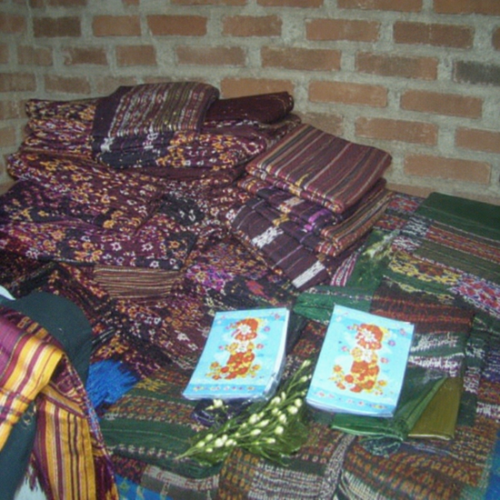
At the time of delivering the dowry, goats and pigs might also be included. As a final part of the exchange, the bride’s family may provide woven fabric in return for the ivory and animals received.
In 2017, local residents estimated the customary value of the longest elephant tusks at between 125 million and 150 million Indonesian rupiah (IDR). Shorter tusks were valued at between 30 million and 120 million IDR.
At that time, the price of woven fabric was between IDR 200,000 and 300,000, the price of a goat was about IDR 5 million, and that of a pig was IDR 3.5 million. The value of animals and woven fabrics can vary depending on local prices and the particular agreement between the two families.
Have a suggestion for this story? We’d love for you to submit it!

All photos courtesy of Wara Sabon Dominikus. Used with permission.

Blank
Blank
Math Resources
Learning Activity:
Sample Problems:
- A dowry of a woman in Adonara consists of two pieces of ivory. If the first piece is worth IDR 130 million and the second IDR 90 million, what is the amount of money you must provide the groom?
- If when delivering a dowry, the family decides on two pieces of ivory, along with 13 goats and three pigs, how much money do they need to buy the animals?
- If a family shows gratitude by giving fabric in return, how many would they need to weave in order to reach an equivalent amount?
- If you live in a part of the world other than Indonesia, convert these amounts to the currency of your country.
Social Justice Questions
- Give your view of the impact on women of the dowry tradition described in this story. How would you feel if your family made a payment to your spouse’s family in order for you to be married?
- Elephant tusks have long been part of traditional marriage exchanges on Adonara, but the ivory trade threatens elephants. How can communities preserve cultural traditions while protecting endangered animals?
Explore Further
- Blog about Adonara Island
- Tourist information about Adonara Island
- Video of a nearby island
Share Your Story
Write your own Global Math Story and send it to us!
 English
 Spanish
Sorry, the comment form is closed at this time.