
PERU
Math and Mystery of the Inca
By Marisa Laks
New York, NY, United States
The Inca first emerged near Cusco, Peru, around the 12th or early 13th century. For many generations, they lived in a relatively small region. Then, during the 15th century, Inca rulers rapidly expanded their territory through conquest and diplomacy. By the time the Spanish arrived in the 1530s, the Inca Empire stretched across South America from present-day Chile to Colombia.
Knot for Everyone
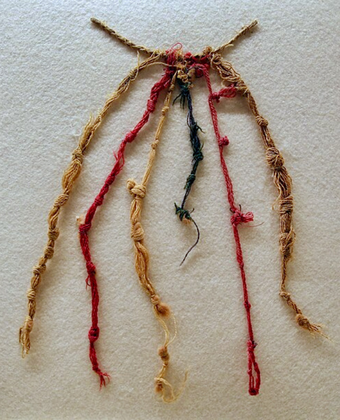
The Inca kept records using a system of knotted cords called a quipu. Using a base-10 system, they tied knots to represent place values, similar to the numbers we use today. The colors and arrangement of the cords probably helped organize different types of information. Trained experts created, read, and cared for these important records.
In addition to the quipu, the Inca used a counting board, similar to an abacus, called a yupana. Some were small enough to carry, while others may have been carved into stone or built into floors. Unfortunately, there is not enough information to know exactly how this tool was used.
Amazing Architecture
The Inca were expert architects and engineers even without the use of wheels, draft animals, or iron tools. In a short period of time, they created a sophisticated network of roads and structures. Many of them are still standing today.
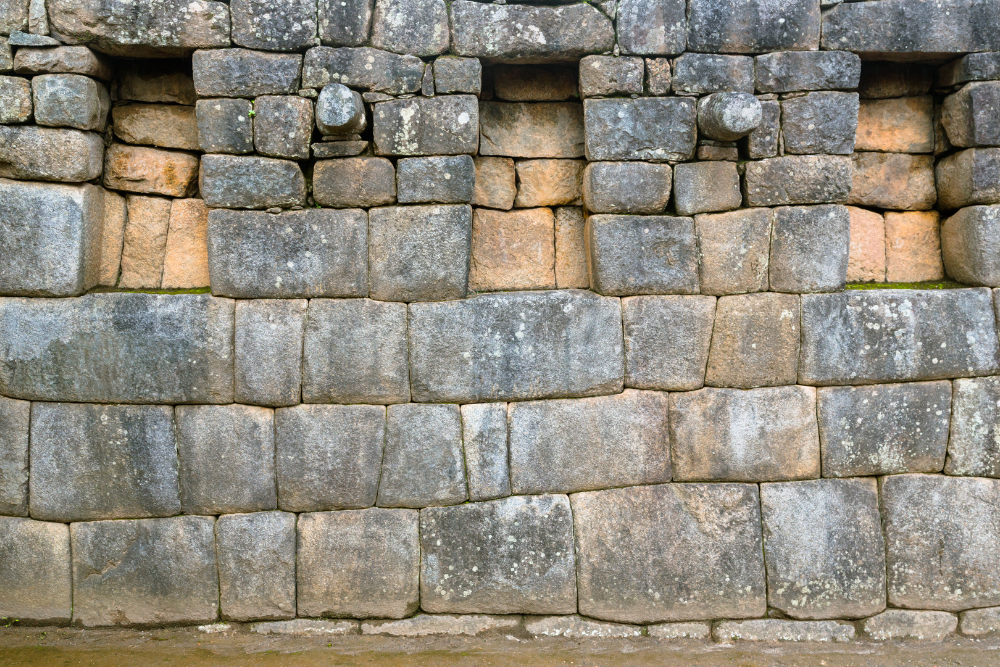
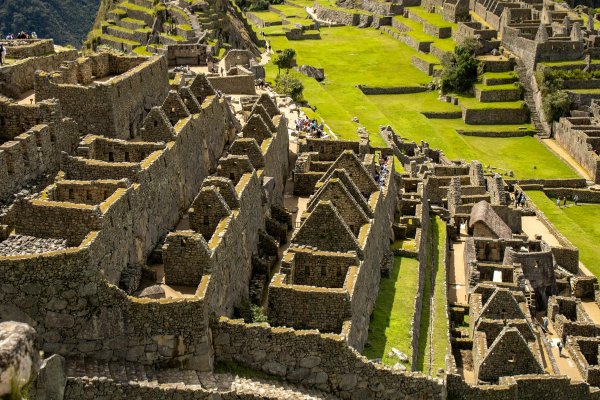
Ancient Inca masonry was so precise that some structures were assembled without the use of mortar. It is said that their stones fit together so perfectly that a knife blade could not fit between them. The interlocking pieces, sloping walls, and trapezoid-shaped openings also helped many buildings withstand earthquakes. During some powerful tremors, newer sites were badly damaged while nearby Inca walls remained intact.
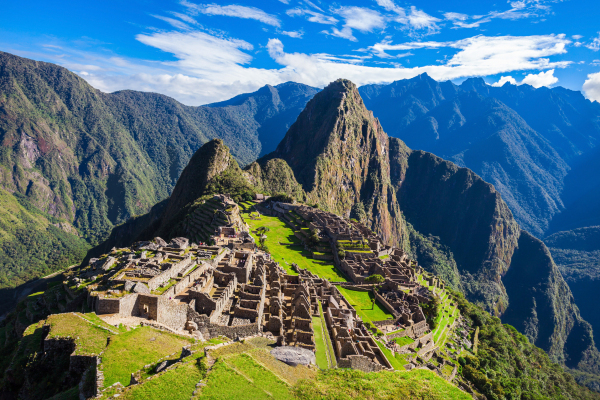
Perhaps the most impressive structures can be found at the renowned Machu Picchu. This mountaintop settlement was built during the 15th century, most likely as a royal estate for the emperor and his household. Stone stairways wind throughout it, connecting its many levels and buildings. Rather than serving as a military fortress, it appears to have been a place for living and working.
Machu Picchu was abandoned around the time of the Spanish conquest. Disease, warfare, and the collapse of the Inca government may all have contributed, but nobody knows for certain. Archaeologists have found little evidence that conquistadors ever reached the site.
From Every Angle
If you visit Machu Picchu, you’ll see many geometric features. For example, parallel terraces built into the side of the mountain were used for farming and provided support for the slopes. Many windows and doorways are shaped like trapezoids, which may have made the buildings more stable. The Temple of the Sun has a curved, semicircular wall, and one of its windows lines up with the rising sun around the June solstice.
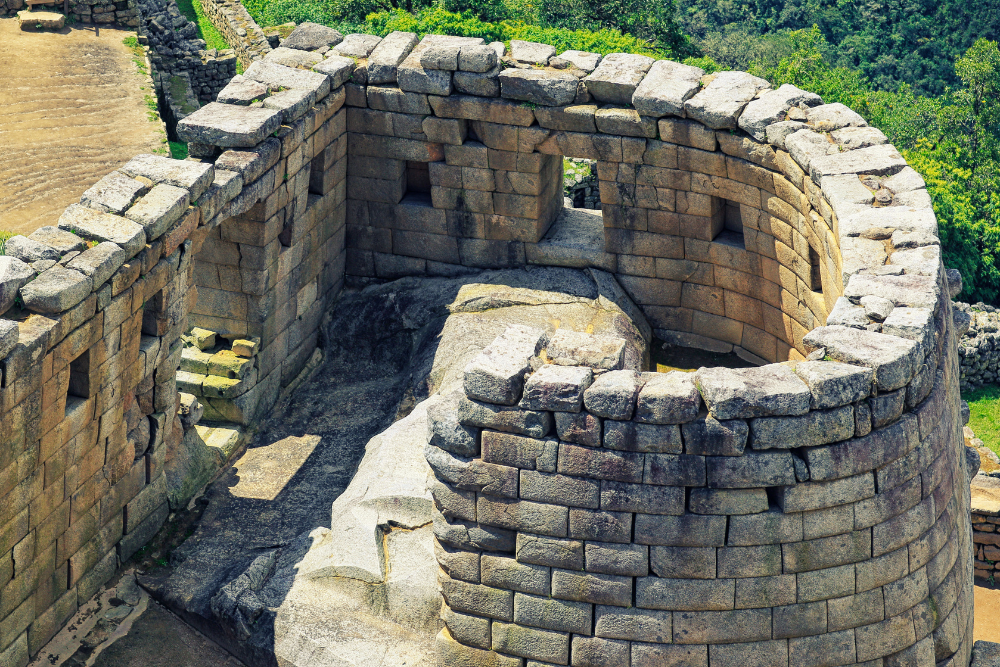
Geometric features are also found in many other Inca sites, such as Ollantaytambo and Sacsayhuamán. Although the Inca Empire lasted for only a short time, it left a lasting legacy that still intrigues and amazes people today!
Have a suggestion for this story? We’d love for you to submit it!
Blank
Blank
Slideshows
Math Resources
Learning Activity:
- Tessellations (Middle and High School)
Sample Problem:
- How big was the Inca Empire? It’s difficult to know exactly, but you could estimate it by finding the areas of these polygons.
Make Your Own Quipu:
- Provide string in different colors for your students to make their own quipu. As a class, determine some small objects in the classroom to count (e.g., pencils, paper clips, rubber bands) and which colors will represent these objects. Also, determine how to represent each number (where to tie the knots, what colors to use, etc.) Give each student a small pile of the objects. Students can count the number of each object in the pile and mark the amount with knots on their quipu. Challenge students to “read” each other’s quipu.
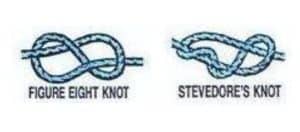
- For older students, you can teach a few more complicated knots, such as a stevedore’s knot and a figure eight knot. See how they can use these different knots to represent place value. For example, if a stevedore’s knot equals 100, a figure eight equals 10 and a single knot equals 1, what does the number 342 look like?
Social Justice Question
Accounts written after the Spanish conquest describe Inca laws as strict and their punishments as severe. Some offenses could result in physical punishment or death, although historians do not know how consistently these penalties were used. What questions should we ask before concluding that harsh punishment prevented crime? Do you think a society can maintain order without using punishments that cause serious harm? Explain your thinking.
Explore Further
- Video about why Machu Picchu was built
- Research on who produced ancient quipu
- More information about the mathematics of the Inca
- Facts and history about the Inca
Share Your Story
Write your own Global Math Story and send it to us!
 English
  Spanish
Sorry, the comment form is closed at this time.